
Documentary Filming at Mount Everest Basecamp
 Documentary Filming at Mount Everest Basecamp
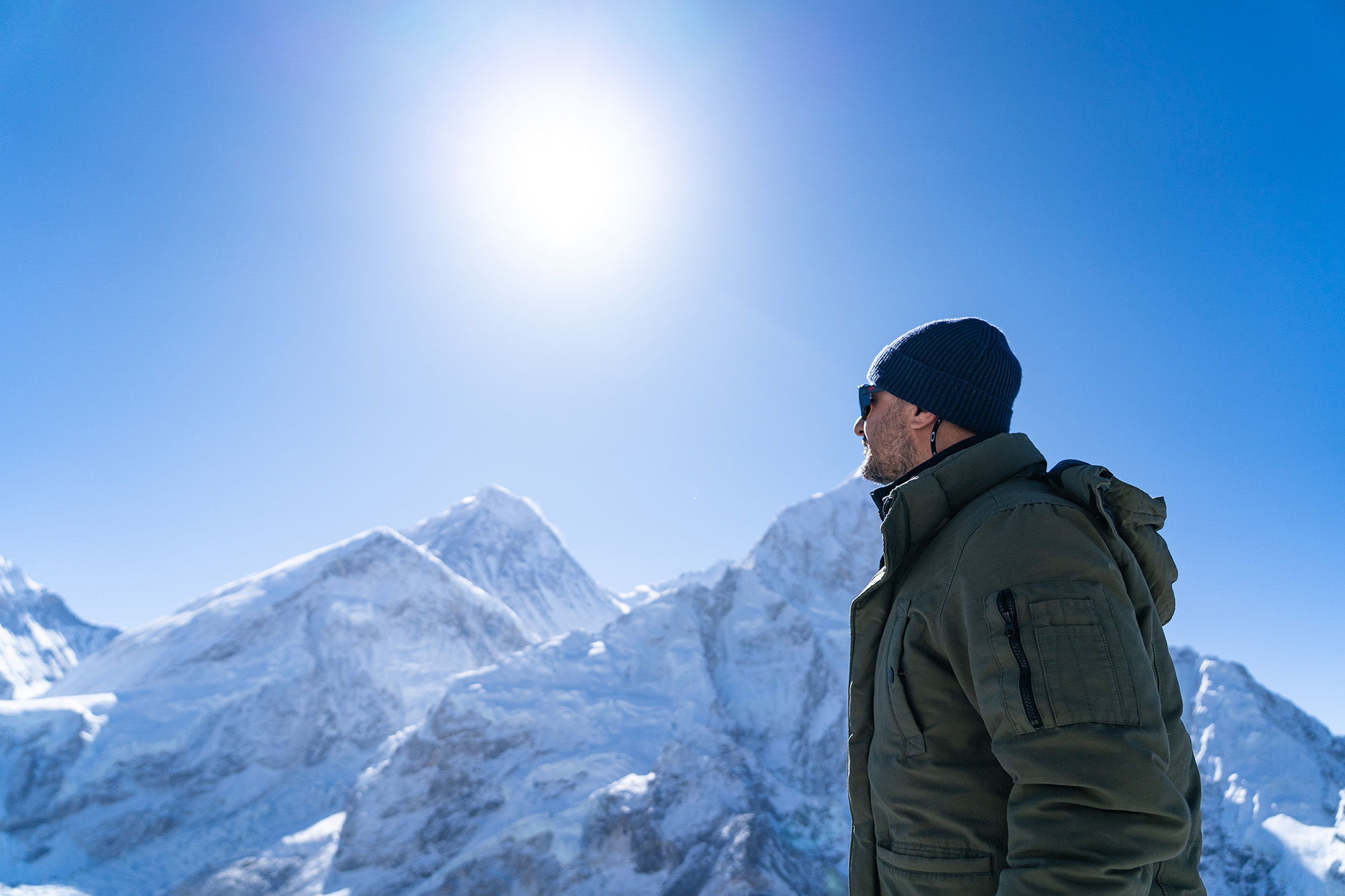
In April 2025 I once again returned to Mount Everest basecamp to film a documentary project. This time with a very different role and level of responsibility. On the previous expedition I worked as a drone operator and basecamp manager, this time the responsibility of filming the main story as the lead cinematographer lay on my shoulders. This was both exciting and at times overwhelming.
My first time trekking to and living at basecamp had its physical challenges; shortness of breath, fatigue, altitude sickness and living in a camp for 42 days. Although challenging at times, I had the time of my life. While I expected the trekking and acclimatization to be easier this time, which it did, the added responsibility of managing all aspects of production presented an entirely new challenge. Looking back, I had not idea how much I was about to grow as a filmmaker.
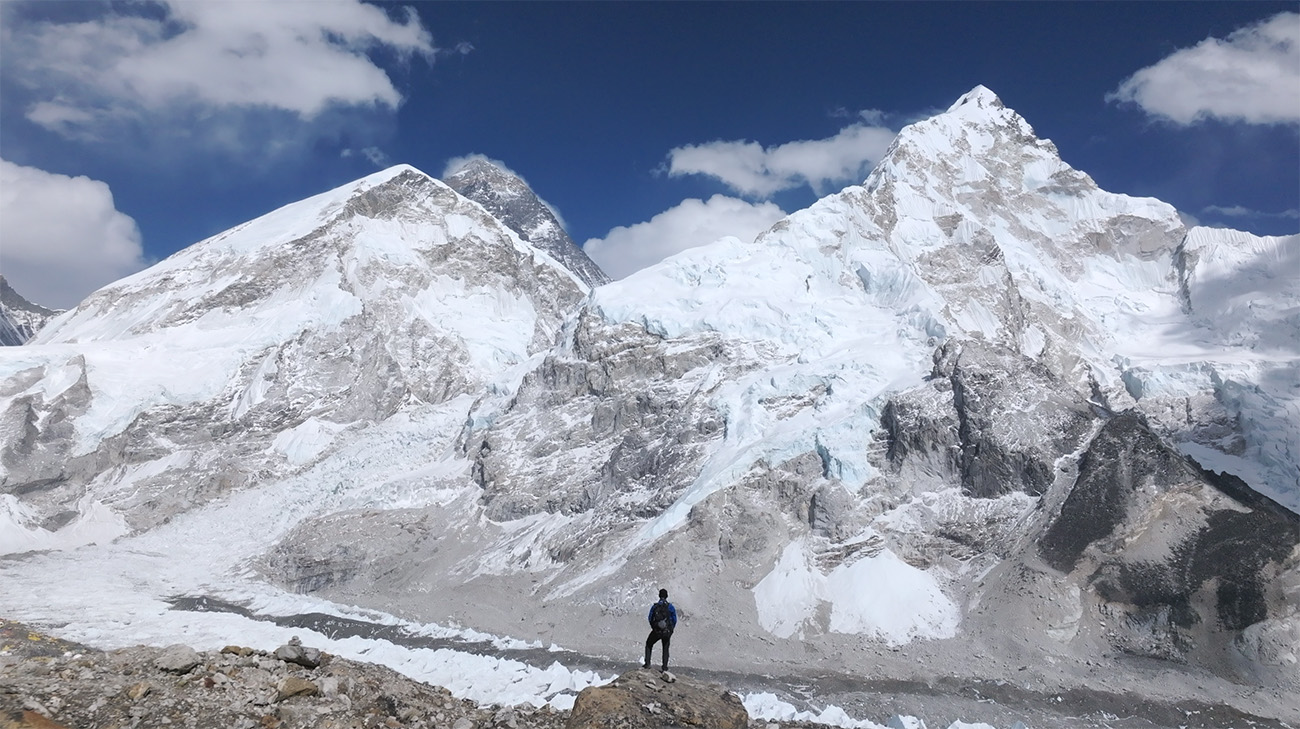
Drone still taken from the project
Journey to Everest Base Camp
Most trekkers begin their journey to Everest Base Camp by flying into Lukla Airport, located at an elevation of approximately 2,850 meters. However, due to serious air quality issues caused by nearby forest fires, many flights were delayed a few days. The team that we were trekking up with had a schedule to stick to so we decided to ride jeeps for three days to a village near Lukla to start our journey.
This video shows one of many dramatic moments that felt like something straight out of a documentary of the world’s most dangerous roads.
Aside from filming one specific scene, we focused on having a fun and safe trek up the mountain with our team. It became a bit physically challenging from about 4000 meters and on overall it was much more manageable than my first expedition.
After spending half day with the trekking team at Base Camp, it was time to part ways and for me to start filming the documentary.
Cinema Verité Documentary Filming at High Altitude
The project was filmed primarily in a cinema verité documentary style.
Scenes included:
- Everest climb preparation
- Puja ceremonies
- Waking up at 12:30 a.m. to film the start of the rotations and summit attempts.
- The drama that takes place at the camp
- General b-roll around basecamp
- Kitchen and support staff at work
- Helicopters taking off and arriving
- Blood tests and breathing exercises
- Rest periods at lower elevations between rotations
- Interviews
- General landscape cinematography
- Epic drone shots footage of the landscape
- Day and night timelapses
- Drone-lapses
Camera Gear
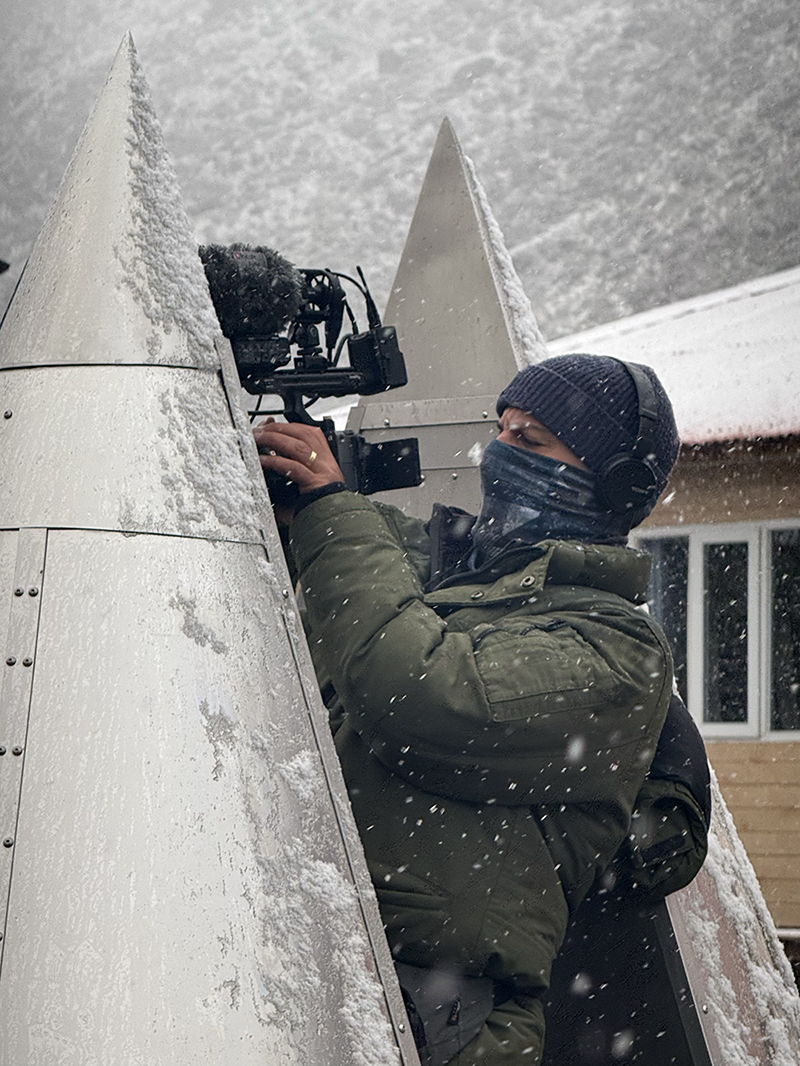
Filming at Pheriche during a rest period
The main camera and lens of choice for this project was the Sony FX3 paired with a Sony FE 24-70mm F2.8 GM. I could walk up to whoever I was filming in most situations so I knew the shorter focal length would not be an issue. I had my 24-105mm with me but preferred having a 2.8 aperture on the wider end of the lens which looked better to me. The image quality of the Sony FE 24-70mm F2.8 GM II is also incredible.
I had a 24-105 and 70-200 lens with me but were not used that often. With the exception of when I filmed general b-roll around basecamp.
The Sony FX3’s stabilization is incredible which allowed me to film with the camera handheld without a rig, significantly reducing fatigue. At high altitude minimizing the weight of your kit is crucial.
Using a vari-nd filter made easier to change exposure and deal with the harsh and changing sunlight.
For audio I had a SENNHEISER MKH 416 microphone mounted to the top of the camera and used a lav mic when needed. The quality of audio that comes from that mic is incredible and it adds a little extra weight to the camera for a better handheld look.
Managing your breathing while filming is another consideration. There were a few situations where I really had to pace myself so that I wouldn’t be breathing heavily behind the camera.
It was also really important to shoot a lot of transition shots. This includes general views of the camp in different weather and lighting conditions, timelapses and drone shots. This helps show the passage of time between scenes.
Drone filming was a lot more fun this time around. I had improved overall as a drone operator and since Base Camp was familiar territory I could be more creative. The DJI Mavic 3 was a great tool for our project.
From a production and documentary perspective my biggest takeaways are:
- Extensive experience filming in a documentary cinema verite style
- Adaptability in fast changing and extreme environments
- More experience flying a drone creatively
I’m always incredibly grateful for the opportunities video production has given me and the places that I get to see.
Filming at Mount Everest Basecamp is undoubtedly challenging but remains an experience that was filled with unforgettable moments and meaningful growth.